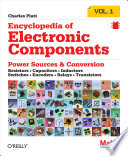
Encyclopedia of Electronics Volume 1
Charles Platt
Want to know how to use an electronic component? This first book of a three-volume set includes key information on electronics parts for your projects?complete with photographs, schematics, and diagrams. You'll learn what each one does, how it works, why it's useful, and what variants exist. No matter how much you know about electronics, you'll find fascinating details you've never come across before. Convenient, concise, well-organized, and precise Perfect for teachers, hobbyists, engineers, and students of all ages, this reference puts reliable, fact-checked information right at your fingertips?whether you're refreshing your memory or exploring a component for the first time. Beginners will quickly grasp important concepts, and more experienced users will find the specific details their projects require. Unique: the first and only encyclopedia set on electronic components, distilled into three separate volumes Incredibly detailed: includes information distilled from hundreds of sources Easy to browse: parts are clearly organized by component type Authoritative: fact-checked by expert advisors to ensure that the information is both current and accurate Reliable: a more consistent source of information than online sources, product datasheets, and manufacturer's tutorials Instructive: each component description provides details about substitutions, common problems, and workarounds Comprehensive: Volume 1 covers power, electromagnetism, and discrete semi-conductors; Volume 2 includes integrated circuits, and light and sound sources; Volume 3 covers a range of sensing devices.
show more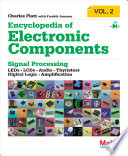
Encyclopedia of Electronics Volume 2
Charles Platt and Fredrik Jansson
Want to know how to use an electronic component? This second book of a three-volume set includes key information on electronics parts for your projects--complete with photographs, schematics, and diagrams. You'll learn what each one does, how it works, why it's useful, and what variants exist. No matter how much you know about electronics, you'll find fascinating details you've never come across before. Perfect for teachers, hobbyists, engineers, and students of all ages, this reference puts reliable, fact-checked information right at your fingertips--whether you're refreshing your memory or exploring a component for the first time. Beginners will quickly grasp important concepts, and more experienced users will find the specific details their projects require. Volume 2 covers signal processing, including LEDs, LCDs, audio, thyristors, digital logic, and amplification. Unique: the first and only encyclopedia set on electronic components, distilled into three separate volumes Incredibly detailed: includes information distilled from hundreds of sources Easy to browse: parts are clearly organized by component type Authoritative: fact-checked by expert advisors to ensure that the information is both current and accurate Reliable: a more consistent source of information than online sources, product datasheets, and manufacturer's tutorials Instructive: each component description provides details about substitutions, common problems, and workarounds Comprehensive: Volume 1 covers power, electromagnetism, and discrete semiconductors; Volume 2 includes LEDs, LCDs, audio, thyristors, digital logic, and amplification; Volume 3 covers a range of sensing devices.
show more
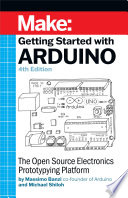
Getting Started with Arduino, 4E
Massimo Banzi, Michael Shiloh
Arduino is the open source electronics prototyping platform that has taken the Maker Movement by storm. This thorough introduction, updated for the latest Arduino release, helps you start prototyping right away. From obtaining the required components to putting the final touches on your project, all the information you need is here! Getting started with Arduino is a snap. To use the introductory examples in this guide, all you need is an Arduino Uno or Leonardo, along with a USB cable and an LED. The easy-to-use, free Arduino development environment runs on Mac, Windows, and Linux. In Getting Started with Arduino, you'll learn about: Interaction design and physical computingThe Arduino board and its software environmentBasics of electricity and electronicsPrototyping on a solderless breadboardDrawing a schematic diagramTalking to a computer--and the cloud--from ArduinoBuilding a custom plant-watering system
show more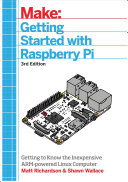
Getting Started with Raspberry Pi, 4E
Shawn Wallace, Matt Richardson, Wolfram Donat
The Raspberry Pi is a credit card-sized computer that plugs into your TV and a keyboard. It is a capable little computer which can be used in electronics projects, and for many of the things that your desktop PC does, like spreadsheets, word processing, browsing the internet, and playing games. It also plays high-definition video. This book takes you step-by-step through many fun and educational possibilities. Take advantage of several preloaded programming languages. Use the Raspberry Pi with Arduino. Create Internet-connected projects. Play with multimedia. With Raspberry Pi, you can do all of this and more.
show more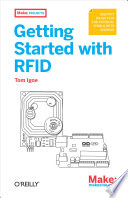
Getting Started with RFID
Tom Igoe
If you want to experiment with radio frequency identification (RFID), this book is the perfect place to start. All you need is some experience with Arduino and Processing, the ability to connect basic circuits on a breadboard with jumper wire—and you’re good to go. You’ll be guided through three hands-on projects that let you experience RFID in action. RFID is used in various applications, such as identifying store items or accessing a toll road with an EZPass system. After you build each of the book’s projects in succession, you’ll have the knowledge to pursue RFID applications of your own. Use Processing to get a sense of how RFID readers behave Connect Arduino to an RFID reader and discover how to use RFID tags as keys Automate your office or home, using RFID to turn on systems when you’re present, and turn them off when you leave Get a complete list of materials you need, along with code samples and helpful illustrations Tackle each project with easy-to-follow explanations of how the code works
show more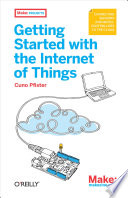
Getting Started with The Internet of Things
Cuno Pfister
What is the Internet of Things? It's billions of embedded computers, sensors, and actuators all connected online. If you have basic programming skills, you can use these powerful little devices to create a variety of useful systems—such as a device that waters plants when the soil becomes dry. This hands-on guide shows you how to start building your own fun and fascinating projects. Learn to program embedded devices using the .NET Micro Framework and the Netduino Plus board. Then connect your devices to the Internet with Pachube, a cloud platform for sharing real-time sensor data. All you need is a Netduino Plus, a USB cable, a couple of sensors, an Ethernet connection to the Internet—and your imagination. Develop programs with simple outputs (actuators) and inputs (sensors) Learn about the Internet of Things and the Web of Things Build client programs that push sensor readings from a device to a web service Create server programs that allow you to control a device over the Web Get the .NET classes and methods needed to implement all of the book's examples
show more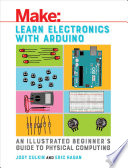
Learn Electronics with Arduino
Jody Culkin, Eric Hagan
This book is your introduction to to physical computing with the Arduino microcontroller platform. No prior experience is required, not even an understanding of basic electronics. With color illustrations, easy-to-follow explanations, and step-by-step instructions, the book takes the beginner from building simple circuits on a breadboard to setting up the Arduino IDE and downloading and writing sketches to run on the Arduino. Readers will be introduced to basic electronics theory and programming concepts, as well as to digital and analog inputs and outputs. Throughout the book, debugging practices are highlighted, so novices will know what to do if their circuits or their code doesn't work for the current project and those that they embark on later for themselves. After completing the projects in this book, readers will have a firm basis for building their own projects with the Arduino. Written for absolute beginners with no prior knowledge of electronics or programming Filled with detailed full-color illustrations that make concepts and procedures easy to follow An accessible introduction to microcontrollers and physical computing Step-by-step instructions for projects that teach fundamental skills Includes a variety of Arduino-based projects using digital and analog input and output
show more
AVR Programming
Elliot Williams
Atmel's AVR microcontrollers are the chips that power Arduino, and are the go-to chip for many hobbyist and hardware hacking projects. In this book you'll set aside the layers of abstraction provided by the Arduino environment and learn how to program AVR microcontrollers directly. In doing so, you'll get closer to the chip and you'll be able to squeeze more power and features out of it. Each chapter of this book is centered around projects that incorporate that particular microcontroller topic. Each project includes schematics, code, and illustrations of a working project. Program a range of AVR chips Extend and re-use other people’s code and circuits Interface with USB, I2C, and SPI peripheral devices Learn to access the full range of power and speed of the microcontroller Build projects including Cylon Eyes, a Square-Wave Organ, an AM Radio, a Passive Light-Sensor Alarm, Temperature Logger, and more Understand what's happening behind the scenes even when using the Arduino IDE
show more
Getting Started with Sensors
Kimmo Karvinen, Tero Karvinen
To build electronic projects that can sense the physical world, you need to build circuits based around sensors: electronic components that react to physical phenomena by sending an electrical signal. Even with only basic electronic components, you can build useful and educational sensor projects. But if you incorporate Arduino or Raspberry Pi into your project, you can build much more sophisticated projects that can react in interesting ways and even connect to the Internet. This book starts by teaching you the basic electronic circuits to read and react to a sensor. It then goes on to show how to use Arduino to develop sensor systems, and wraps up by teaching you how to build sensor projects with the Linux-powered Raspberry Pi.
show moreMake: magazine premium Smart Home project collection
MakerShed
Make: Radio
Fredrik Jansson and Charles Platt
Radio waves are all around us. They're used by cell phones, Wi-Fi routers, TV dishes, and even satellite networks to convey data on thousands of different frequencies. When we unlock a car door with the push of a button or stream music to wireless earbuds, that's radio. It's a simple yet dynamic technology that has been harnessed by creative experimenters for over a century--and now you can join the adventure! Author Fredrik Jansson demystifies the world of radio through a dozen innovative projects, enabling readers to build inexpensive radio circuits such as transmitters and receivers, remote controls, and a working metal detector. Radio concepts are also adapted for the Raspberry Pi Pico, updating classic concepts with contemporary tools for accuracy and power. With more than 150 color images, step-by-step instructions and detailed explanations, and a handy materials list of components and sources, this is the ultimate guide to explore the hidden universe of radio waves!
show more
Raspberry Pi and AVR Projects
Cefn Hoile, Clare Bowman , et al.
As an incredibly cheap, credit-card sized computer, the Raspberry Pi is breaking down barriers by encouraging people of all ages to experiment with code and build new systems and objects; and this book provides readers with inspiring and insightful examples to explore and build upon. Written for intermediate to seasoned Raspberry Pi users, this book explores four projects from around the world, explained by their makers. These projects cover five major categories in the digital maker space: music, light, games, home automation, and the Internet of Things.
show moreMake: Wearables 2nd Edition
Kate Hartman
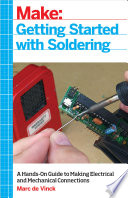
Getting Started with Soldering
Marc de Vinck
Getting Started with Soldering not only teaches new makers and experimenters the core principles of soldering, it also functions as an excellent reference and resource for beginners and more advanced makers alike. The book guides readers through the fundamentals of soldering, explains the tools and materials, demonstrates proper techniques, and shows how to fix mistakes or broken connections. It even includes guidance on more advanced techniques such as surface-mount soldering for electronics. From choosing the right soldering iron to making perfect connections, readers will acquire the knowledge and skills needed to form a strong foundation for a lifetime of making. Soldering is a core concept in making, electronics prototyping, and home repairs The many different types of soldering -- requiring different materials and tools -- are explained with easy-to-follow instructions Full-color photographs and illustrations throughout create a visually engaging format for learning Pricing and technical considerations help readers select the best tools for their budgets and needs Troubleshooting guidelines show how to repair solder connections that have failed from improper technique or from age
show more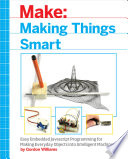
Making Things Smart
Gordon F. Williams
Making Things Smart teaches the fundamentals of the powerful ARM microcontroller by walking beginners and experienced users alike through easily assembled projects comprised of inexpensive, hardware-store parts. Current ARM programming books take a bland, textbook approach focused on complex, beginner-unfriendly languages like C or ARM Assembler. Making Things Smart uses Espruino (JavaScript for Hardware), flattening the learning curve.
show more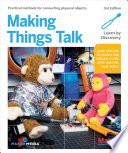
Making Things Talk
Tom Igoe
The workbenches of hobbyists, hackers, and makers have become overrun with microcontrollers, computers-on-a-chip that power homebrewed video games, robots, toys, and more. In Making Things Talk, Tom Igoe, one of the creators of Arduino, shows how to make these gadgets talk. Whether you need to connect some sensors to the Internet or create a device that can interact wirelessly with other creations, this book shows you what you need. Although they are powerful, the projects in this book are inexpensive to build: the Arduino microcontroller board itself ranges from around $25 to $40. The networking hardware covered here includes Ethernet, Wi-Fi, Bluetooth, and can be had for $25 to $50. Fully updated for the latest Arduino hardware and software, this book lets you combine microcontrollers, sensors, and networking hardware to make things... and make them talk to each other!
show more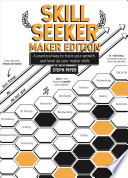
Skill Seeker: Maker Edition
Steph Piper
Skill Seeker is a practical solution for tracking growth and leveling up your skills. There is an overwhelming amount of things to do, from learning a new tech skill like 3D printing to traditional handiwork like sewing. What if we could gamify these parts of life and gain experience points for learning or doing something new? Skill Seeker does just that in a choose-your-own-adventure-style goal-setting guide book. Video games are famous for skill trees: A mechanism to visually see your progress, calculating your experience points and showing your level, unlocking badges and new abilities. Skill Seeker puts the concept of skill trees into real life. Featuring pathways to leveling up across 15 skill areas, including 3D modeling, crafting, electronics, entrepreneurship, metalworking, robotics, and woodworking. Use powerful gamification techniques of badging and leveling to your advantage to motivate a new stage of growth in your chosen skill areas. Show off your Life XP (experience) score, a tally of every tile completed across key areas, plus a dashboard of progress for a birds eye view of your skill distribution. Are you more tech-skill focused, or well balanced? Skill Seeker will identify your makeup, and chart a path toward whatever future you choose!
show moreTips and Tales from the Workshop Vol 1
Gareth Branwyn
Tips and Tales from the Workshop Vol 2
Gareth Branwyn