Agentic AI in Enterprise
Sumit Ranjan
This book delves into the transformative power of Enterprise Agentic AI, tracing its evolution from basic automation to intelligent agents capable of contextual reasoning, memory retention, and autonomous decision-making. It provides a strategic roadmap for enterprises looking to integrate Agentic AI seamlessly into their operations while ensuring scalability, efficiency, and security. Readers will explore architectural best practices, including cloud, hybrid, and on-premises deployment models, and gain insights into LLM optimization strategies like Retrieval-Augmented Generation (RAG) and fine-tuning. The book also covers advanced prompt engineering techniques, the role of vector databases in AI-driven applications, and governance frameworks to ensure ethical, transparent, and responsible AI adoption. Through real-world case studies, the book illustrates AI’s impact across retail, healthcare, supply chain management, and customer engagement. It also examines the next wave of AI advancements, such as autonomous decision-making, AI-augmented leadership, and the evolving synergy between human expertise and intelligent agents in enterprise settings. By the end of this book, readers will have the knowledge and tools to design, deploy, and manage AI agents that are not only cutting-edge but also aligned with enterprise security, governance, and ethical standards. You Will: Understand how AI agents go beyond traditional models by incorporating contextual reasoning, long-term memory, and autonomous decision-making to enhance enterprise operations. Explore scalable deployment models (cloud, hybrid, on-premises) and best practices for integrating LLMs, vector databases, and prompt engineering into your AI workflows. Develop robust AI governance frameworks, conduct risk assessments, and implement security protocols to safeguard enterprise data while ensuring responsible AI adoption. Gain insights into transparency, accountability, and fairness in AI deployments, ensuring AI agents align with corporate values and global ethical standards. This book is for : Enterprise Architects.
show more
The Agentic AI Revolution
Will Hawkins
The evolution of AI isn’t just about predictive models and automation; it’s about the emergence of “agentic” capabilities—autonomous and specialized AI systems that operate with a sense of independence by acting on a user’s behalf. This book explores through dialogue between the authors, the transformative role of AI in modern organizations, beginning with its evolution from automation to augmentation and the paradigm shift in human-machine collaboration. The book starts with Microsoft's AI ecosystem, showcasing tools like Copilot, Power Platform, Dynamics 365, and Azure AI that enable AI agentic solutions. It further emphasizes responsible AI implementation, covering ethical guidelines, risk mitigation, and security measures with a specific focus on agentic systems. Finally, it provides a roadmap for businesses and professionals to adapt to an agentic workforce, measuring AI’s impact while preparing for future breakthroughs. After reading this book, you will be able to leverage agentic systems at scale and also address the implications of using agentic AI responsibly. What You Will Learn: The foundations of “agency” in AI Practical strategies for implementing agentic AI solutions using Microsoft’s ecosystem Best practices in Responsible AI, ethical considerations, and risk mitigation for autonomous agents Actionable next steps for embracing agentic AI in day-to-day work and broader AI transformation efforts Who This Book Is For: AI engineers, Business Analysts, and enterprise architects curious about specialized AI strategies
show more
Agentic Hyper-Personalized Dimensions
Andreas François Vermeulen
Agentic Hyper-Personalized Dimensions – Six Dimensions of Business Dark Data explores how generative AI (Gen-AI), combined with agentic intelligence, can transform raw enterprise data into hyper-personalized, actionable insights. This book introduces a practical framework for building AI-powered agent swarms that operate across six critical dimensions of business dark data, empowering intelligent automation, decision augmentation, and strategic foresight at unprecedented scale. In an age when data is underutilized, organizations are overwhelmed by complexity, latency, and fragmentation. Traditional analytics pipelines fall short in handling dynamic environments and human-centric demands. This book addresses this critical gap by detailing how autonomous Gen-AI agents — built on foundational disciplines of data engineering, data science, and machine learning — can process, personalize, and operationalize hidden insights buried deep within enterprise systems. The six dimensions presented in the book form a cognitive and computational blueprint that guides the design, deployment, and evolution of agentic swarms. Each dimension focuses on a specific mode of intelligence — such as contextual reasoning, emotional alignment, or real-time adaptive sensing — and shows how AI agents can specialize within each domain to maximize business impact. Readers won’t just learn theory — they’ll explore field-tested methodologies to deploy Gen-AI-powered solutions at enterprise scale. From zoned data lakes and transformer models to swarm governance and consensus mechanisms, the book walks readers through the full life cycle of building intelligent systems that learn, evolve, and act with purpose. What makes this book essential — and unlike others in the market — is that the author is not writing from the sidelines. He is actively architecting and delivering these systems today, with firsthand insight into what works, what fails, and what the future holds. The methodology presented blends system design, human-aligned AI, industrial automation, and trusted decision-making, offering readers a rich and practical road map for AI-first enterprise innovation. What You Will Learn How to structure AI-powered agents across six interlinked cognitive and computational dimensions to effectively process dark data and deliver hyper-personalized, real-time business insights. Practical knowledge on how to orchestrate swarms of Gen-AI agents — governed by Councils — that collaboratively manage complexity, detect emerging patterns, and operate autonomously in enterprise environments. The foundational and advanced skills required to implement generative AI and agent-based intelligence within large-scale, multi-cloud, and hybrid business ecosystems. Who This Book is For This book is designed for professionals and practitioners operating at the intersection of artificial intelligence and business transformation. It is ideal for AI developers, data scientists, solution architects, enterprise engineers, and technical managers who are looking to move beyond the hype of generative AI and apply it meaningfully within industrial and enterprise-grade ecosystems.
show more
AI Identities
Rosario Mastrogiacomo
AI Identities introduces a groundbreaking concept: AI Agents should be recognized and governed as a new class of identity within enterprise environments. As artificial intelligence evolves from predictive models to autonomous agents with memory, goals, and tool access, enterprises face a new spectrum of identity risk that transcends traditional IAM frameworks. This book lays out the philosophical, architectural, and operational foundations necessary to govern these intelligent machine identities across their lifecycles. Structured across six parts, the book begins by grounding readers in identity security and ownership. It then introduces the concept of AI agents as complex, evolving identities that demand governance, not just access control. It offers practical guidance on lifecycle management, trust, discovery, and incident response for AI agents, and concludes with future-facing perspectives on human-AI collaboration, critical infrastructure, and compliance. This is not a coding manual or abstract ethics book—it’s a field guide for security professionals, architects, and digital leaders who must design, secure, and take responsibility for the AI identities acting on behalf of their organizations. The writing is crisp, deeply informed, and structured to support real-world decision-making in an era where the lines between automation and agency are quickly disappearing. WHAT YOU WILL LEARN: Understand the emerging category of AI Identities and how they differ from traditional machine accounts. Develop strategies for ownership, governance, and lifecycle control of AI agents in enterprise environments. Build a framework for discovery, trust scoring, explainability, and behavioral auditing of autonomous agents. Learn how to respond to security incidents involving intelligent agents and prevent cascading failures. Gain insights into the future of human-AI collaboration and the governance challenges posed by agentic AI. WHO THIS BOOK IS FOR This book is for enterprise security architects, identity professionals, risk officers, and technology executives responsible for the governance and security of digital systems. It is written to inform decision-makers and practitioners who need to understand how to integrate AI agents into their existing identity, compliance, and security programs.
show more
Architecting Enterprise AI Applications
Anton Cagle
This book explores how to define, design, and maintain enterprise AI applications, exploring the impacts they will have on the teams who work with them. The book is structured into four parts. In Part 1: Defining Your AI Application, you are introduced to the dynamic interplay between human adaptability and AI specialization, the concept of meta systems, and the mechanics of prediction machines. In Part 2: Designing Your AI Application, the book delves into the anatomy of an AI application, unraveling the intricate relationships among data, machine learning, and reasoners. This section introduces the building blocks and enterprise architectural framework for designing multi-agent systems. Part 3: Maintaining Your AI Application takes a closer look at the ongoing life cycle of AI systems. You are guided through the crucial aspects of testing and test automation, providing a solid foundation for effective development practices. This section covers the critical tasks of security and information curation that ensure the long-term success of enterprise AI applications. The concluding section, Part 4: AI Enabled Teams, navigates the evolving landscape of collaborative efforts between humans and AI. It explores the impact of AI on remote work dynamics and introduces the new roles of the expert persona and the AI handler. This section concludes with a deep dive into the legal and ethical dimensions that AI-enabled teams must navigate. This book is a comprehensive guide that not only equips developers, architects, and product owners with the technical know-how of AI application development, but also delves into the broader implications for teams and society. What You Will Learn Understand the algorithms and processes that enable AI to make accurate predictions and enhance decision making Grasp the concept of metasystems and their role in the design phase of AI applications Know how data, machine learning, and reasoners drive the functionality and decision-making capabilities of AI applications Know the architectural components necessary for scalable and maintainable multi-agent AI applications Understand methodologies for testing AI applications, ensuring their robustness, accuracy, and reliability in real-world applications Understand the evolving dynamics of human-AI coordination facing teams in the new enterprise working environment Who This book Is For A diverse audience, primarily targeting enterprise architects, middle managers, tech leads, and team leads entrenched in the IT sector or possessing a tech-savvy background, including professionals such as digital marketers. Additionally, tech-savvy individual contributors--ranging from digital content creators and data analysts to administrators and programmers--stand to benefit significantly.
show more
Building Applications with Large Language Models
Bhawna Singh
This book delves into a broad spectrum of topics, covering the foundational aspects of Large Language Models (LLMs) such as PaLM, LLaMA, BERT, and GPT, among others. The book takes you through the complexities involved in creating and deploying applications based on LLMs, providing you with an in-depth understanding of the model architecture. You will explore techniques such as fine-tuning, prompt engineering, and retrieval augmented generation (RAG). The book also addresses different ways to evaluate LLM outputs and discusses the benefits and limitations of large models. The book focuses on the tools, techniques, and methods essential for developing Large Language Models. It includes hands-on examples and tips to guide you in building applications using the latest technology in Natural Language Processing (NLP). It presents a roadmap to assist you in navigating challenges related to constructing and deploying LLM-based applications. By the end of the book, you will understand LLMs and build applications with use cases that align with emerging business needs and address various problems in the realm of language processing. What You Will Learn Be able to answer the question: What are Large Language Models? Understand techniques such as prompt engineering, fine-tuning, RAG, and vector databases Know the best practices for effective implementation Know the metrics and frameworks essential for evaluating the performance of Large Language Models Who This Book Is For An essential resource for AI-ML developers and enthusiasts eager to acquire practical, hands-on experience in this domain; also applies to individuals seeking a technical understanding of Large Language Models (LLMs) and those aiming to build applications using LLMs
show more
Building Generative AI Agents
Tom Taulli
The dawn of AI agents is upon us. Tech visionaries like Bill Gates, Andrew Ng, and Vinod Khosla have highlighted the monumental potential of this powerful technology. This book will provide the knowledge and tools necessary to build generative AI agents using the most popular frameworks, such as AutoGen, LangChain, LangGraph, CrewAI, and Haystack. Recent breakthroughs in large language models have opened up unprecedented possibilities. After years of gradual progress in machine learning and deep learning, we are now witnessing novel approaches capable of understanding, reasoning, and generating content in ways that promise to revolutionize nearly every industry. This platform shift is as significant as the advent of mainframes, PCs, cloud computing, mobile technology, and social media. It’s why the world’s largest technology companies – like Microsoft, Apple, Google, and Meta – are making enormous investments in this category. While chatbots like ChatGPT, Claude, and Gemini have demonstrated remarkable potential, the years ahead will see the rise of generative AI agents capable of executing complex tasks on behalf of users. These agents already exhibit capabilities such as running test suites, searching the web for documentation, writing software, answering questions based on vast organized information, and performing intricate web-based tasks across multiple domains. They can autonomously investigate cybersecurity incidents and address complex customer support needs. By integrating skills, knowledge bases, planning frameworks, memory, and feedback loops, these systems can handle many tasks and improve over time. Building Generative AI Agents serves as a high-quality guide for developers to understand when and where AI agents can be useful, their advantages and disadvantages, and practical advice on designing, building, deploying, and monitoring them. What You Will Learn The foundational concepts, capabilities, and potential of AI agents. Recent innovations in large language models that have enabled the development of AI agents. How to build AI agents for launching a product, creating a financial plan, handling customer service, and using Retrieval Augmented Generation (RAG). Essential frameworks for building generative AI agents, including AutoGen, LangChain, LangGraph, CrewAI, and Haystack. Step-by-step guidance on designing, building, and deploying AI agents. Insights into the future of AI agents and their potential impact on various industries. Who This Book Is For Experienced software developers
show more
Data Science Solutions on Azure
Julian Soh
Understand and learn the skills needed to use modern tools in Microsoft Azure. This book discusses how to practically apply these tools in the industry, and help drive the transformation of organizations into a knowledge and data-driven entity. It provides an end-to-end understanding of data science life cycle and the techniques to efficiently productionize workloads. The book starts with an introduction to data science and discusses the statistical techniques data scientists should know. You'll then move on to machine learning in Azure where you will review the basics of data preparation and engineering, along with Azure ML service and automated machine learning. You'll also explore Azure Databricks and learn how to deploy, create and manage the same. In the final chapters you'll go through machine learning operations in Azure followed by the practical implementation of artificial intelligence through machine learning. Data Science Solutions on Azure will reveal how the different Azure services work together using real life scenarios and how-to-build solutions in a single comprehensive cloud ecosystem. What You'll Learn Understand big data analytics with Spark in Azure Databricks Integrate with Azure services like Azure Machine Learning and Azure Synaps Deploy, publish and monitor your data science workloads with MLOps Review data abstraction, model management and versioning with GitHub Who This Book Is For Data Scientists looking to deploy end-to-end solutions on Azure with latest tools and techniques.
show more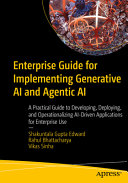
Enterprise Guide for Implementing Generative AI and Agentic AI
Shakuntala Gupta Edward
Generative AI and Agentic AI together are revolutionizing the technology landscape, with profound and far-reaching impacts across industries. Organizations are increasingly adopting these technologies to drive innovation, enhance unstructured content management, and improve problem-solving capabilities. With Agentic AI, enterprises are moving towards the development of intelligent systems that can plan, reason, and act with autonomy. While early proof-of-concepts (POCs) demonstrated the potential of these technologies, the current shift is toward responsible and scalable production implementations that leverage both generative and agentic capabilities. This book begins by guiding you through the technological evolution of AI, from early machine learning to today’s large language models (LLMs) and agentic systems. It then explores a wide range of use cases across industries, highlighting how LLMs can support decision-making, and how Agentic AI enables dynamic, collaborative systems that act with autonomy and intent. This is followed by Design Patterns across the lifecycle of AI solution development, deployment and monitoring. Readers will then gain insights into the methodologies for developing and deploying Generative and Agentic AI solutions at an enterprise level. A featured implementation demonstrates how Agentic AI can be effectively put into action. The book also introduces essential concepts such as MLOps, LLMOps, and Responsible AI principles which are critical for transitioning the AI solutions from experimentation to production. These principles ensure that AI deployments are scalable, secure, ethical and compliant. The book concludes with key takeaways and best practices for developing, evaluating, deploying and scaling AI applications responsibly and effectively within enterprise settings. You Will: Understand key design patterns to develop, deploy and monitor a Generative AI solution effectively. Learn how to develop and implement a production-ready Agentic AI use case. Discover best practices for building scalable, secure, and enterprise-grade AI solutions. Understand how to assess and mitigate risks using Responsible AI principles and LLMOps best practices. This book is for : Enterprise Software Engineers and Architects
show more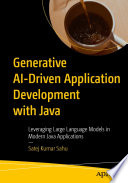
Generative AI-Driven Application Development with Java
Satej Kumar Sahu
This is the first hands-on guide that takes you from a simple “Hello, LLM” to production-ready microservices, all within the JVM. You’ll integrate hosted models such as OpenAI’s GPT-4o, run alternatives with Ollama or Jlama, and embed them in Spring Boot or Quarkus apps for cloud or on-pre deployment. You’ll learn how prompt-engineering patterns, Retrieval-Augmented Generation (RAG), vector stores such as Pinecone and Milvus, and agentic workflows come together to solve real business problems. Robust test suites, CI/CD pipelines, and security guardrails ensure your AI features reach production safely, while detailed observability playbooks help you catch hallucinations before your users do. You’ll also explore DJL, the future of machine learning in Java. This book delivers runnable examples, clean architectural diagrams, and a GitHub repo you can clone on day one. Whether you’re modernizing a legacy platform or launching a green-field service, you’ll have a roadmap for adding state-of-the-art generative AI without abandoning the language—and ecosystem—you rely on. What You Will Learn Establish generative AI and LLM foundations Integrate hosted or local models using Spring Boot, Quarkus, LangChain4j, Spring AI, OpenAI, Ollama, and Jlama Craft effective prompts and implement RAG with Pinecone or Milvus for context-rich answers Build secure, observable, scalable AI microservices for cloud or on-prem deployment Test outputs, add guardrails, and monitor performance of LLMs and applications Explore advanced patterns, such as agentic workflows, multimodal LLMs, and practical image-processing use cases Who This Book Is For Java developers, architects, DevOps engineers, and technical leads who need to add AI features to new or existing enterprise systems. Data scientists and educators will also appreciate the code-first, Java-centric approach.
show more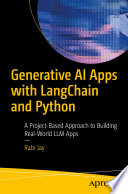
Generative AI Apps with LangChain and Python
Rabi Jay
Future-proof your programming career through practical projects designed to grasp the intricacies of LangChain’s components, from core chains to advanced conversational agents. This hands-on book provides Python developers with the necessary skills to develop real-world Large Language Model (LLM)-based Generative AI applications quickly, regardless of their experience level. Projects throughout the book offer practical LLM solutions for common business issues, such as information overload, internal knowledge access, and enhanced customer communication. Meanwhile, you’ll learn how to optimize workflows, enhance embedding efficiency, select between vector stores, and other optimizations relevant to experienced AI users. The emphasis on real-world applications and practical examples will enable you to customize your own projects to address pain points across various industries. Developing LangChain-based Generative AI LLM Apps with Python employs a focused toolkit (LangChain, Pinecone, and Streamlit LLM integration) to practically showcase how Python developers can leverage existing skills to build Generative AI solutions. By addressing tangible challenges, you’ll learn-by-be doing, enhancing your career possibilities in today’s rapidly evolving landscape. What You Will Learn Understand different types of LLMs and how to select the right ones for responsible AI. Structure effective prompts. Master LangChain concepts, such as chains, models, memory, and agents. Apply embeddings effectively for search, content comparison, and understanding similarity. Setup and integrate Pinecone vector database for indexing, structuring data, and search. Build Q & A applications for multiple doc formats. Develop multi-step AI workflow apps using LangChain agents. Who This Book Is For Python programmers who aim to develop a basic understanding of AI concepts and move from LLM theory to practical Generative AI application development using LangChain; those seeking a structured guide to enhance their careers by learning to create robust, real-world LLM-powered Generative AI applications; data scientists, analysts, and experienced developers new to LLMs.
show more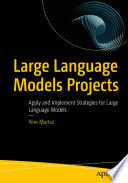
Large Language Models Projects
Pere Martra
This book offers you a hands-on experience using models from OpenAI and the Hugging Face library. You will use various tools and work on small projects, gradually applying the new knowledge you gain. The book is divided into three parts. Part one covers techniques and libraries. Here, you'll explore different techniques through small examples, preparing to build projects in the next section. You'll learn to use common libraries in the world of Large Language Models. Topics and technologies covered include chatbots, code generation, OpenAI API, Hugging Face, vector databases, LangChain, fine tuning, PEFT fine tuning, soft prompt tuning, LoRA, QLoRA, evaluating models, and Direct Preference Optimization. Part two focuses on projects. You'll create projects, understanding design decisions. Each project may have more than one possible implementation, as there is often not just one good solution. You'll also explore LLMOps-related topics. Part three delves into enterprise solutions. Large Language Models are not a standalone solution; in large corporate environments, they are one piece of the puzzle. You'll explore how to structure solutions capable of transforming organizations with thousands of employees, highlighting the main role that Large Language Models play in these new solutions. This book equips you to confidently navigate and implement Large Language Models, empowering you to tackle diverse challenges in the evolving landscape of language processing. What You Will Learn Gain practical experience by working with models from OpenAI and the Hugging Face library Use essential libraries relevant to Large Language Models, covering topics such as Chatbots, Code Generation, OpenAI API, Hugging Face, and Vector databases Create and implement projects using LLM while understanding the design decisions involved Understand the role of Large Language Models in larger corporate settings Who This Book Is For Data analysts, data science, Python developers, and software professionals interested in learning the foundations of NLP, LLMs, and the processes of building modern LLM applications for various tasks
show more
Mastering LangChain
Sanath Raj B Narayan
This book provides a comprehensive exploration of LangChain, empowering you to effectively harness large language models (LLMs) for Gen AI applications. It focuses on practical implementation and techniques, making it a valuable resource for learning LangChain. The book starts with foundational topics such as environment setup and building basic chains, then delves into key components such as prompt templates, tool integration, and memory management. You will also explore practical topics such as output parsing, embedding models, and developing chatbots and retrieval-augmented generation (RAG) systems. Additional chapters focus on integrating LangChain with other AI tools and deploying applications while emphasizing best practices for AI ethics and performance. By the time you finish this book, you’ll have the know-how to confidently build Generative AI solutions using LangChain. Whether you're exploring practical applications or curious about the latest trends, this guide gives you the tools and insights to solve real-world AI problems. You’ll be ready to design smart, data-driven applications—and rethink how you approach Generative AI. What You Will Learn Understand the core ideas, architecture, and essential features of the LangChain framework Create advanced LLM-driven workflows and applications that address real-world challenges Develop robust Retrieval-Augmented Generation (RAG) systems using LangChain, vector databases, and proven best practices for retrieving and generating high-quality responses Who This Book Is For Data scientists and AI enthusiasts with basic Python skills who want to use LangChain for advanced development, and Python developers interested in building data-responsive applications with large language models (LLMs)
show more
Mastering Retrieval-Augmented Generation
Ranajoy Bose
Retrieval-Augmented Generation (RAG) represents the cutting edge of AI innovation, bridging the gap between large language models (LLMs) and real-world knowledge. This book provides the definitive roadmap for building, optimizing, and deploying enterprise-grade RAG systems that deliver measurable business value. This comprehensive guide takes you beyond basic concepts to advanced implementation strategies, covering everything from architectural patterns to production deployment. You'll explore proven techniques for document processing, vector optimization, retrieval enhancement, and system scaling, supported by real-world case studies from leading organizations. Key Learning Objectives Design and implement production-ready RAG architectures for diverse enterprise use cases Master advanced retrieval strategies including graph-based approaches and agentic systems Optimize performance through sophisticated chunking, embedding, and vector database techniques Navigate the integration of RAG with modern LLMs and generative AI frameworks Implement robust evaluation frameworks and quality assurance processes Deploy scalable solutions with proper security, privacy, and governance controls Real-World Applications Intelligent document analysis and knowledge extraction Code generation and technical documentation systems Customer support automation and decision support tools Regulatory compliance and risk management solutions Whether you're an AI engineer scaling existing systems or a technical leader planning next-generation capabilities, this book provides the expertise needed to succeed in the rapidly evolving landscape of enterprise AI. What You Will Learn Architecture Mastery: Design scalable RAG systems from prototype to enterprise production Advanced Retrieval: Implement sophisticated strategies, including graph-based and multi-modal approaches Performance Optimization: Fine-tune embedding models, vector databases, and retrieval algorithms for maximum efficiency LLM Integration: Seamlessly combine RAG with state-of-the-art language models and generative AI frameworks Production Excellence: Deploy robust systems with monitoring, evaluation, and continuous improvement processes Industry Applications: Apply RAG solutions across diverse enterprise sectors and use cases Who This Book Is For Primary audience: Senior AI/ML engineers, data scientists, and technical architects building production AI systems; secondary audience: Engineering managers, technical leads, and AI researchers working with large-scale language models and information retrieval systems Prerequisites: Intermediate Python programming, basic understanding of machine learning concepts, and familiarity with natural language processing fundamentals
show more
Mastering Spring AI
Banu Parasuraman
Dive into the future of programming with this comprehensive guide for Java developers to integrate large language models (LLMs) and Generative AI using the Spring Framework. This book comes at a revolutionary time when AI technology is transforming how we implement solutions in various fields, including natural language processing, content generation, and predictive analytics. With its widespread use in the Java community, the Spring Framework is a logical choice for this integration. By focusing on integrating LLMs and GenAI with Spring, this book bridges a significant gap between cutting-edge AI technologies and traditional Java development practices. The author uses a hands-on approach, guiding you through practical implementation to effectively show how to apply theory in real-world situations. Basic introductions of topics—Spring AI, Spring Framework, and other related AI technologies—evolve into advanced integrations to ensure that you find valuable insights regardless of your starting level. Additionally, this book dedicates sections to security and ethical considerations, addressing the pressing issues associated with AI. With a look at emerging trends and future developments, this book prepares you for what's next, ensuring that you are not just catching up with the current state of technology but are also ready for future advancements. What You Will Learn • Master the integration of LLMs and GenAI with the Spring Framework • Develop practical skills in developing AI-driven applications using Java • Gain insights into handling data, security, and ethical considerations in AI applications • Apply strategies for optimizing performance and scalability in AI-enabled applications • Prepare for future AI trends and technologies Who This Book Is For Intermediate to advanced Java developers who are familiar with the Spring Framework, including concepts such as dependency injection, Spring Boot, and building RESTful services. This foundational knowledge will help developers grasp the more advanced topics of integrating AI technologies with Spring. Prior knowledge of basic AI concepts and machine learning is helpful but not essential as the book covers these topics from the ground up.
show more
The Practical Guide to Large Language Models
Ivan Gridin
This book is a practical guide to harnessing Hugging Face's powerful transformers library, unlocking access to the largest open-source LLMs. By simplifying complex NLP concepts and emphasizing practical application, it empowers data scientists, machine learning engineers, and NLP practitioners to build robust solutions without delving into theoretical complexities. The book is structured into three parts to facilitate a step-by-step learning journey. Part One covers building production-ready LLM solutions introduces the Hugging Face library and equips readers to solve most of the common NLP challenges without requiring deep knowledge of transformer internals. Part Two focuses on empowering LLMs with RAG and intelligent agents exploring Retrieval-Augmented Generation (RAG) models, demonstrating how to enhance answer quality and develop intelligent agents. Part Three covers LLM advances focusing on expert topics such as model training, principles of transformer architecture and other cutting-edge techniques related to the practical application of language models. Each chapter includes practical examples, code snippets, and hands-on projects to ensure applicability to real-world scenarios. This book bridges the gap between theory and practice, providing professionals with the tools and insights to develop practical and efficient LLM solutions. What you will learn: What are the different types of tasks modern LLMs can solve How to select the most suitable pre-trained LLM for specific tasks How to enrich LLM with a custom knowledge base and build intelligent systems What are the core principles of Language Models, and how to tune them How to build robust LLM-based AI Applications Who this book is for: Data scientists, machine learning engineers, and NLP specialists with basic Python skills, introductory PyTorch knowledge, and a primary understanding of deep learning concepts, ready to start applying Large Language Models in practice.
show more
Scaling Enterprise Solutions with Large Language Models
Arindam Ganguly
Artificial Intelligence (AI) is the bedrock of today's applications, propelling the field towards Artificial General Intelligence (AGI). Despite this advancement, integrating such breakthroughs into large-scale production-grade enterprise applications presents significant challenges. This book addresses these hurdles in the domain of large language models within enterprise solutions. By leveraging Big Data engineering and popular data cataloguing tools, you’ll see how to transform challenges into opportunities, emphasizing data reuse for multiple AI models across diverse domains. You’ll gain insights into large language model behavior by using tools such as LangChain and LLamaIndex to segment vast datasets intelligently. Practical considerations take precedence, guiding you on effective AI Governance and data security, especially in data-sensitive industries like banking. This enterprise-focused book takes a pragmatic approach, ensuring large language models align with broader enterprise goals. From data gathering to deployment, it emphasizes the use of low code AI workflow tools for efficiency. Addressing the challenges of handling large volumes of data, the book provides insights into constructing robust Big Data pipelines tailored for Generative AI applications. Scaling Enterprise Solutions with Large Language Models will lead you through the Generative AI application lifecycle and provide the practical knowledge to deploy efficient Generative AI solutions for your business. What You Will Learn Examine the various phases of an AI Enterprise Applications implementation. Turn from AI engineer or Data Science to an Intelligent Enterprise Architect. Explore the seamless integration of AI in Big Data Pipelines. Manage pivotal elements surrounding model development, ensuring a comprehensive understanding of the complete application lifecycle. Plan and implement end-to-end large-scale enterprise AI applications with confidence. Who This Book Is For Enterprise Architects, Technical Architects, Project Managers and Senior Developers.
show more
Transforming Conversational AI
Michael McTear
Acquire the knowledge needed to work effectively in conversational artificial intelligence (AI) and understand the opportunities and threats it can potentially bring. This book will help you navigate from the traditional world of dialogue systems that revolve around hard coded scripts, to the world of large language models, prompt engineering, conversational AI platforms, multi-modality, and ultimately autonomous agents. In this new world, decisions are made by a system that may forever remain a ‘black box’ for most of us. This book aims to eliminate unnecessary noise and describe the fundamental components of conversational AI. Past experiences will prove invaluable in constructing seamless hybrid systems. This book will provide the most recommended solutions, recognizing that it is not always necessary to blindly pursue new tools. Written in unprecedented and turbulent times for conversational interfaces you’ll see that despite previous waves of advancement in conversational technology, now conversational interfaces are gaining unparalleled popularity. Specifically, the release of ChatGPT in November 2022 by Open AI revolutionized the conversational paradigm and showed how easy and intuitive communication with a computer can be. Old professions are being disrupted, new professions are emerging, and even the most conservative corporations are changing their strategy and experimenting with large language models, allocating an unprecedented amount of budget to these projects. No one knows for sure the exact future of conversational AI, but everyone agrees that it’s here to stay. What You'll Learn See how large language models are constructed and used in conversational systems Review the risks and challenges of new technologies in conversational AI Examine techniques for prompt engineering Enable practitioners to keep abreast of recent developments in conversational AI Who This Book Is For Conversation designers, product owners, and product or project managers in conversational AI who wish to learn about new methods and challenges posed by the recent emergence in the public domain of ChatGPT. Data scientists, final year undergraduates and graduates of computer science
show more
Transforming Financial Services with Generative AI
Srinath Godavarthi
Generative AI (GenAI) is revolutionizing the financial services sector (FSS), offering new ways to enhance efficiency, improve customer experiences, and streamline operations. This book is your comprehensive guide to understanding and implementing GenAI within FSS. Grounded in real-world use cases, this book moves from fundamentals to boardroom-ready execution. You’ll start with the core concepts behind AI, machine learning, and GenAI, then pivot into the challenges of FSS: intense regulatory scrutiny, evolving fraud threats, operational complexity, and rising expectations for personalized, always-on service. You’ll learn a practical blueprint for GenAI adoption, including strategy, governance, risk controls, data readiness, and culture—through the lens of executives tasked with delivering measurable value responsibly. From there, you’ll get hands-on experience building GenAI systems: prompt design, evaluation, Retrieval-Augmented Generation (RAG), fine-tuning, and agentic workflows. You’ll see how these capabilities power mission-critical functions across the enterprise: Finally, you’ll operationalize all of it with modern FMOps/LLMOps practices—security, privacy, performance, cost management, monitoring, and continuous improvement—so pilots become production systems that scale. The closing chapter distills emerging trends, from autonomous agents to domain-specialized models, and lays out next steps so your organization can adopt GenAI with confidence, compliance, and a clear return on investment. Whether you’re a CIO crafting a roadmap, a product leader shipping AI features, a data scientist building RAG pipelines, or a risk and compliance executive seeking control and clarity, this book is your end-to-end guide to deploying GenAI that is safe, explainable, and enterprise-grade. What You Will Learn Develop a strategic blueprint for GenAI adoption, including implementation methodologies, risk mitigation, and best practices for financial institutions Master the core components of building GenAI applications, from prompt engineering and model evaluation to RAG and Agentic AI Discover how GenAI transforms risk and compliance management, including applications in Anti-Money Laundering (AML), trade surveillance, and regulatory reporting Explore practical GenAI use cases across retail banking, investment banking, and wealth management, and learn about successful operational deployment Who This Book Is For Data scientists, AI professionals, and financial services experts interested in leveraging generative AI within the financial sector.
show moreUnderstanding Large Language Models
Thimira Amaratunga
This book will teach you the underlying concepts of large language models (LLMs), as well as the technologies associated with them. The book starts with an introduction to the rise of conversational AIs such as ChatGPT, and how they are related to the broader spectrum of large language models. From there, you will learn about natural language processing (NLP), its core concepts, and how it has led to the rise of LLMs. Next, you will gain insight into transformers and how their characteristics, such as self-attention, enhance the capabilities of language modeling, along with the unique capabilities of LLMs. The book concludes with an exploration of the architectures of various LLMs and the opportunities presented by their ever-increasing capabilities-as well as the dangers of their misuse. After completing this book, you will have a thorough understanding of LLMs and will be ready to take your first steps in implementing them into your own projects. You will: Grasp the underlying concepts of LLMs Gain insight into how the concepts and approaches of NLP have evolved over the years Understand transformer models and attention mechanisms Explore different types of LLMs and their applications Understand the architectures of popular LLMs Delve into misconceptions and concerns about LLMs, as well as how to best utilize them.
show more